

Entrevista a Francisco Machado, ingeniero de Energía en INEGI y socio de AIHRE
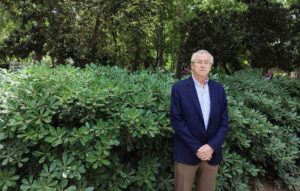
Francisco Machado is an engineer at INEGI – Institute of Science and Innovation in Mechanical and Industrial Engineering, a Technology and Innovation Center created in 1986, focused on carrying out research and technology-based innovation activities, technology transfer, consulting, and technological services aimed at the development of industry and the economy in general.
INEGI has participated in the development of different types of renewable gas projects, contributing to technological progress, the qualification of the business fabric, and the implementation of solutions aligned with the national and European objectives of energy transition.
- What is INEGI’s role in the AIHRE project and how does it contribute to the development of renewable hydrogen?
INEGI coordinates the activities of characterizing relevant stakeholders in the renewable hydrogen value chain in the POCTEP area and the current state of technology, in order to define opportunities and technological developments to promote its implementation in the cooperation area, also actively participating in other project activities.
Renewable hydrogen currently faces challenges for its implementation, with the consolidation of a functional and integrated value chain being one of the main obstacles. One of the measures that will strongly contribute to the accelerated development of such a chain will be the establishment of strategic partnerships.
We believe that the creation of strategic alliances between companies, research centers, and public entities is essential to accelerate the sector’s development. These allow combining skills, creating more comprehensive technological solutions, and fostering innovation.
AIHRE is precisely a concrete example of this collaborative approach, which seeks not only to promote the use of renewable hydrogen as an energy vector in the region, but also to identify the priority segments of the value chain that deserve investment and development, always under a logic of regional valorization and international cooperation.
- INEGI is a renowned research center. What other initiatives on the use of renewable hydrogen are you currently developing?
INEGI has established itself as a national reference in the renewable hydrogen sector, with a transversal role throughout the entire value chain. Our participation ranges from applied research to direct support for industry.
We collaborate with various developers in the design of renewable hydrogen production plants and in defining their layouts, thus ensuring cost-efficient operation. In addition, we support developers in finding off-takers for the hydrogen produced, as well as in providing technical assistance for the submission of funding applications that ensure the economic viability of their projects.
Furthermore, INEGI plays an active role in the technical study of different processes associated with the hydrogen value chain: development of advanced tools for simulating the operation of production plants, high-pressure storage solutions, analysis of gas distribution networks to enable the introduction of different percentages of hydrogen, or simulation of hydrogen combustion processes for the modernization of existing equipment.
Finally, we are strongly committed to the technical training of different types of entities, transferring the knowledge generated in R&D projects to the field. We actively contribute to ensuring that the energy transition is not only possible, but also sustainable and competitive for our partners.
- What are the main public policies in Portugal that support the development of renewable hydrogen?
Portugal has promoted the integration of hydrogen into the economy, clearly showing developers its intention to include it in different sectors. In fact, it was one of the first European countries to formulate its national hydrogen strategy (EN-H2).
On the financial side, the Portuguese Government has made available various support mechanisms, including CAPEX incentives, which have enabled concrete projects to be made viable. Also noteworthy is the creation of a centralized renewable gas purchasing mechanism to guarantee initial demand that sustains the development of this market.
In addition, various official documents have been prepared that support, from a technical perspective, the development of projects for the production, transport, and consumption of this energy vector. This includes regulations for national gas distribution and transport networks or the simplification of the licensing process for renewable hydrogen production plants.
- What are the main challenges for the effective implementation of these policies at the national and regional levels?
Despite strategic advances and the existence of financing instruments, the implementation of policies for renewable hydrogen still faces several challenges in Portugal.
At the national level, one of the main obstacles is the complexity and slowness of licensing processes, which are not always adapted to the particularities of this new technology. In addition to updating the process, it is necessary to strengthen coordination among the different stakeholders—developers, municipalities, industry, and academia—to avoid delays.
High initial investments represent another challenge. Additional public support is required to ensure the economic viability of projects, especially in sectors where competition with fossil fuels remains strong.
Finally, the qualification of human resources is a cross-cutting challenge. The training of technicians, engineers, and managers with specialized knowledge in hydrogen is essential to ensure the implementation of policies and the sustainable growth of the sector.
It should be noted, however, that many of these challenges have already been identified by the authorities, who have begun to implement initiatives to mitigate them, from process simplification to training programs. The focus now must be on the efficient and coordinated implementation of the defined policies.
- What role do European funds, such as Interreg POCTEP, play in promoting hydrogen projects in Portugal?
The renewable hydrogen market is in an early stage and with materialization difficulties, making it evident that support for both supply and demand is necessary for its development, just as happened previously with other energy vectors.
Due to the high investment and risk of these projects, it is essential to have funds that help finance their start-up, support operations, and promote technological improvements or network creation, thus facilitating market development.
In the specific case of the Interreg POCTEP program, the focus on cross-border cooperation makes it possible to leverage synergies between regions of different countries, accelerate knowledge exchange, and facilitate the development of solutions adapted to local contexts, which is crucial for the balanced territorial deployment of hydrogen.
- In your opinion, what similarities and differences exist in the implementation of renewable hydrogen between Portugal and Spain?
Portugal and Spain share geographical and climatic characteristics that give them a competitive advantage in renewable hydrogen production, thanks to the unique availability of renewable resources that allow its production at competitive costs.
In this regard, similarities between the national strategies of both countries are evident, taking into account, naturally, the scale of each one, such as the creation of production hubs in areas with great renewable potential, the commitment to large-scale projects, and the use of European financing mechanisms.
- How do you see the future of renewable hydrogen in Portugal and in the Oporto region in the next 5 to 10 years?
Over the past decades, there have already been other moments of interest in hydrogen as an energy solution, especially in times of energy crises or geopolitical instability. However, those previous cycles did not materialize into effective and sustained adoption, either due to lack of a consistent political framework, technological immaturity, or the absence of viable business models.
This time, however, there is clear alignment between climate goals, public investment, and technological maturity, which allows us to look with greater realism and confidence at the integration of this vector into the energy and industrial matrix.
The development of renewable hydrogen in Portugal will inevitably be gradual, reflecting the existing technological, economic, and regulatory challenges. It is likely that the pace of adoption, in the first years, will be slower than the most optimistic expectations, something natural in emerging technologies with great infrastructure impact.
In the short term, hydrogen penetration will be faster in sectors where it is already used, such as the petrochemical and refining industries. In fact, projects that seek to replace gray hydrogen with renewable hydrogen are already at an advanced stage, representing a relevant scale opportunity for the sector.

 EN
EN  ES_ES
ES_ES  PT
PT