

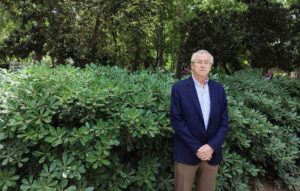
Interview with Diogo Canhão, researcher at the University of Évora and member of AIHRE
Diogo Canhão de Sousa Canavarro is a senior researcher with the SOL4R group at the University of Évora. Within the framework of the AIHRE project, the University contributes its research infrastructure and collaboration networks to promote the adoption of renewable hydrogen, highlighting, in particular, the work carried out on modelling hydrogen production through the integration of solar energy in the biomass gasification process.
- The University of Évora seeks to enhance the contribution of solar energy to the energy transition. How does the AIHRE project fit into this strategic vision of SOL4R?
The AIHRE project fits very naturally into the University of Évora's SOL4R strategic vision, one of the pillars of which is to strengthen the role of solar energy as a central vector of the energy transition, especially in southern Portugal.
By promoting solutions based on the production of renewable hydrogen from solar sources, AIHRE contributes to the valorisation of technologies that enable one of the main challenges of renewable energies to be overcome: storage and flexibility of the energy system. In this sense, the project reinforces SOL4R's integrated approach, which combines applied research, technological demonstration and human resources training, in close collaboration with the business and industrial ecosystem.
- Creating a community among different stakeholders is a fundamental objective of the AIHRE Ecosystem. What added value does the exchange of experiences with companies and other organisations in the sector bring to an academic institution?
The creation of an active community between academia, companies and other organisations in the sector is extremely valuable for an academic institution. This interaction allows scientific research to be aligned with the real needs of the market, increasing the relevance, applicability and impact of the results obtained.
In addition, the exchange of experiences facilitates knowledge transfer, accelerates technological maturation and contributes to the training of students and researchers with a more practical and multidisciplinary vision. In the context of AIHRE, this dynamic reinforces the role of the University as a catalyst for innovation, promoting more robust and sustainable energy solutions.
- What is the current situation regarding renewable hydrogen in your region (Évora)?
In the Évora region, renewable hydrogen is still in its early stages of development, particularly in terms of research, pilot projects, and strategic planning. However, there are very favourable conditions for its future success, namely high solar potential, the existence of relevant scientific infrastructure and growing coordination between academic institutions, local authorities and companies.
Projects such as AIHRE contribute to creating critical mass, testing concepts and preparing the territory for the progressive integration of renewable hydrogen into the regional energy system.
- At a social level, what impact do you expect the implementation of these clean energies developed within the framework of the AIHRE to have?
From a social point of view, the implementation of clean energies developed within the framework of the AIHRE can have a very positive impact. Highlights include the creation of skilled jobs, the revitalisation of the local economy and the strengthening of the population's energy literacy.
In addition, these solutions contribute to reducing emissions, improving air quality and increasing energy resilience, factors that are directly reflected in the well-being of communities. The project also plays an important role in raising awareness about a fair and sustainable energy transition.
- We are in the final stretch of the project. How do you feel at this point about the milestones achieved in AIHRE?
In the final stretch of the project, the feeling is generally very positive. AIHRE has made it possible to consolidate partnerships, create an active community, and achieve significant milestones in terms of knowledge, cooperation, and demonstration of innovative solutions.
There is also satisfaction in seeing that the project has laid solid foundations for future initiatives, leaving a legacy that goes beyond its formal duration, both in terms of collaborative networks and strategic vision.
- A wish for 2026 in relation to renewable hydrogen?
The wish for 2026 is that renewable hydrogen will move from being a largely experimental concept to a solution that is effectively integrated into the energy system, with full-scale demonstration projects and viable business models.
Specifically for the Alentejo region, it would be desirable for renewable hydrogen to establish itself as a natural complement to solar energy, contributing to the sustainable development of the territory and positioning Portugal as a relevant player in this field at European level.

 EN
EN  ES_ES
ES_ES  PT
PT